Barry, OppHub America Desk · · Source: oilprice-main
Iran War Drives Southeast Asia Renewable Push
Energy and climate policy shifts drive rapid repositioning across global resource equities; assess sector exposure relative to broader commodity volatility.
Based on reporting from oilprice-main.
Southeast Asia's renewable energy push accelerates as conflict in the Middle East tightens fossil fuel markets and strains regional energy security. According to an October IEA report cited in recent industry coverage, rising electricity demand and supply vulnerabilities are prompting governments to fast-track long-term electrification policies.
Market context for this story
As of: WeekendLoading quotes…
Informational only — not investment advice. Full markets →


$LNG
TradingView
Live chart & market data via TradingView · OppHub classroom · Delayed or exchange real-time per TradingView data agreements · Not investment advice
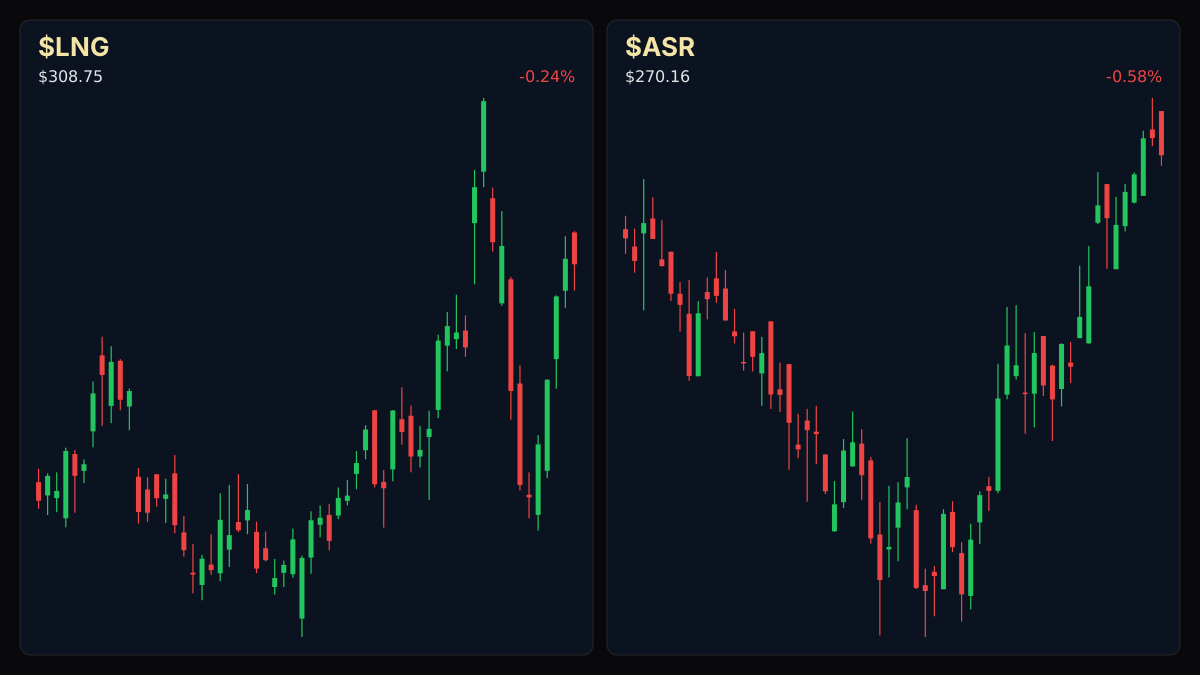
Educational TradingView chart — search any symbol in the widget. Confirm on /markets/LNG and related $ASR. Not investment advice.
Related markets
Shares a vertical MP4 loop to your phone's camera roll or app share sheet (Instagram, TikTok, Facebook Reels).
Southeast Asia's renewable energy push accelerates as conflict in the Middle East tightens fossil fuel markets and strains regional energy security, forcing governments to prioritize long-term capacity expansion.
### Money Play Energy and climate policy shifts across global markets continue to influence traditional and alternative resource allocations.
## Catalyst Analysis: Regional Energy Security & Policy Shifts Driven by expanding industrial development, cooling demands, and data center growth, Southeast Asia's electricity consumption is projected to climb at a steady clip between 2026 and 2030. Regional crude oil output has declined significantly since its 1990s peak, creating heavier reliance on imported fuels and liquefied natural gas. The onset of hostilities in Iran has disrupted fuel trade channels, exposing vulnerabilities and prompting nations including Indonesia, Malaysia, Thailand, Singapore, Vietnam, and the Philippines to announce dozens of new energy policies between February 28 and August 31.
## Technical Analysis & Key Risk Watch
## Impact on Sector and Global Markets Short-term government interventions focus primarily on immediate fossil fuel relief, whereas long-term regulatory frameworks target structural electrification and grid modernization. The International Energy Agency's projections indicate that renewable capacity across the broader Asia-Pacific region outside China is positioned for substantial expansion through 2031, reshaping global equipment supply chains and infrastructure capital expenditures.
Read the full story
Original reporting and related coverage — attribution links only, not paid recommendations.
Trade this story
 Robinhood
 Webull
 Tradier
 IBKR
Chart this story
 TradingView
Broker and exchange buttons use invite / refer-a-friend links (rewards may be capped). Charting links (TradingView) are partner offers that may pay OppHub America a commission at no extra cost to you.
OppSHOP
Full OppSHOP →As an Amazon Associate, OppHub America earns from qualifying purchases. Shopping here helps keep the site free — at no extra cost to you. Disclosure

OppSHOP
Related to this story
Energy and climate policy shifts drive rapid repositioning across global
Shop related →

Investing books
Read the classics
Shop this pick →

Personal finance books
Run the household books
Shop this pick →

Trading notebooks
Write the thesis first
Shop this pick →

Monitor for charts
See every pane
Shop this pick →
Story playbook
A pre-built map of what to watch — stocks, ETFs, and educational next steps. Not personalized advice.
Snapshot date: November 14, 2026 at 4:08 PM ET
This playbook was built when the story published and is not live-updated. Prices, news, and risk can change after this date — treat it as a starting map, not a current trade ticket.
Story → money map
Southeast Asia Renewable Push
Trouble in the Middle East is making traditional fuels expensive and hard to get, so countries in Southeast Asia are rushing to build more solar, wind, and green energy projects. Investors care because this massive shift creates big new opportunities for companies that build renewable power and modern electrical grids.
What changed
Middle East hostilities and constrained fuel supplies have forced Southeast Asian nations to fast-track long-term renewable energy and electrification policies.
Who wins / who loses
Clean energy developers, grid equipment makers, and alternative energy providers benefit, while traditional fossil fuel importers and regions heavily reliant on foreign oil face higher costs.
Time horizon
Think in terms of the next few months.
Confidence & best fit
medium confidence · Long-term investor
Safer theme exposure (ETFs)
Baskets that own the theme without betting on one company.
Single stocks (higher risk)
Primary = closest to the story · Peers = same industry · Second-order = knock-on effects · Avoid = looks related but may be a trap
Primary
- $ICLNBuild slowly — only if it fits your plan
A basket of clean energy stocks that benefits when countries rush to build solar and wind power.
View $ICLN chart → · End-of-day delayed data
Peer
- $NEEWatch — track, don’t rush
A major renewable energy company that sets the tone for how green power stocks perform overall.
View $NEE chart → · End-of-day delayed data
Second-order
- $XOMProtect — reduce risk
A traditional oil company that might see volatile swings as fuel markets react to international conflicts.
View $XOM chart → · End-of-day delayed data
Options (education only)
No strikes or expiries — a framework for how traders might express the view. Options can expire worthless.
Beginners should skip options here and stick to buying shares of clean energy funds if they want to invest.
See options-friendly brokers →Income / OppHub America angle
Not a trade tip — ways to use the insight outside the market.
- Look into local engineering and electrical equipment suppliers operating within the ASEAN region.
What would break this thesis
- Rapid resolution of Middle East conflicts leading to a sharp drop in traditional fossil fuel prices and a rollback of green subsidies.
What to do next on OppHub America
Saved playbooks stay on this device for now.
Important
Not financial advice. OppHub America playbooks are educational market maps only — not recommendations to buy, sell, or hold any security. Markets move fast; information can be wrong or outdated. Trade and invest at your own risk. Do your own research or consult a licensed advisor.
Based on reporting from oilprice-main.
Informational and educational only — not investment, financial, or legal advice. Disclosure
Shares a vertical MP4 loop to your phone's camera roll or app share sheet (Instagram, TikTok, Facebook Reels).